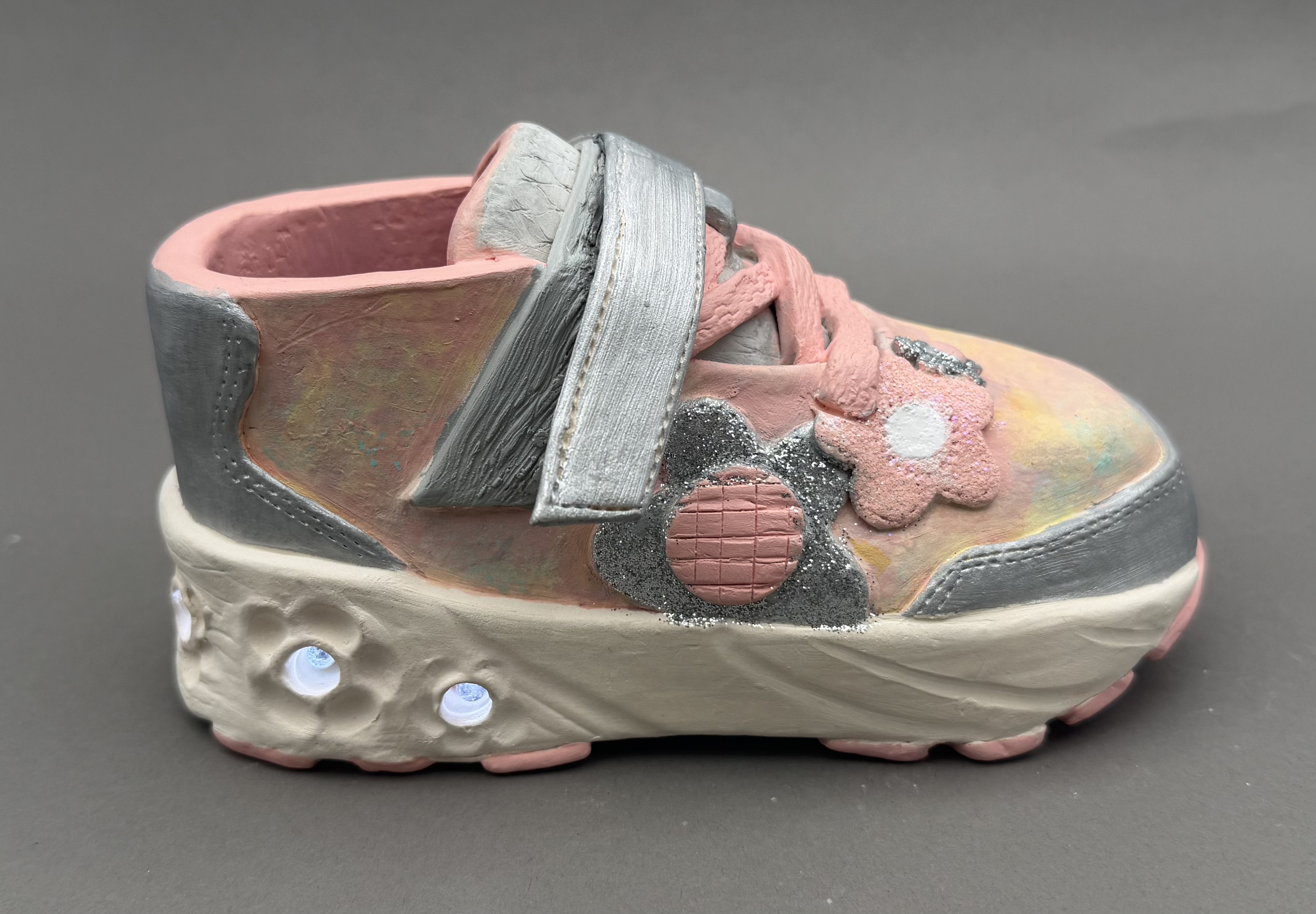
I’ve always been a very nostalgic person. Even from the age of five, I was hesitant to let go of things I had outgrown. I believed my items had feelings, and I constantly worried about “what if one day….” While that mindset has certainly changed to an extent, I believe nostalgia is deeply part of a very human experience. Nostalgia gives us the ability to look at our past in an introspective way, reflect on what matters to us, and allows us to relive the past, whether it be good or bad, in a positive light. It captures the small moments and reminds us that the small things make up the person we are. The goal for many of my pieces is to inspire the viewer to explore the idea of nostalgia.
Can Kids Be Nostalgic?
Currently, there’s been an upsurge in Gen Z and Millennials expressing nostalgia; however, nostalgia has generally been associated with aging and overromanticizing moments like high school or college.
When I was younger, I always felt a small surge of shame for feeling nostalgic. I associated it with being too tied to consumption and as a feeling that felt reserved for those with more life experience. Going back to when I was five, it sounds kind of ironic that a five year old could be nostalgic. At the same time, with so much less experience and less time, each item or experience holds a larger fraction of significance. As humans, we fear change and loss so much that letting go of an experience that may hold up the entire center of a child’s life might feel incredibly scary.
As a high schooler myself, I’ve worked to show that kids can feel nostalgia. Each of my pieces captures items that feel like such tokens of childhood, yet are items we move on from very easily in the moment despite the feeling they inspire today. By capturing very singular moments from very singular eras (like making a light-up children’s shoe), I hope to show the permanence these moments can have on our lives. Ceramics as a material is permanent once fired, yet also so fragile, and I think that beautifully captures the feeling of nostalgia.
I also believe that by representing a simple object in an art form, people pay more attention. It’s so easy to glaze over the small things we see in our daily lives, yet the beauty in “trompe l’oeil” (“fool the eye”) is that it asserts importance and reflection in everyday objects.
The importance of nostalgia, particularly now
As I mentioned earlier, Gen Z and Millennials are seeing an upsurge in nostalgia. Some claim that these generations are simply gaining more attention because of social media and the very visible displays of nostalgia, while older generations might reminisce about old days in offhand conversations. I find this particularly thought provoking. What does it say about society if younger generations are hanging onto items for nostalgia while older generations hang onto vocalizing memories?
People also believe that these more recent generations may be feeling especially nostalgic due to the extreme turbulence in these generations’ childhood. Constantly improving technology, artificial intelligence, political polarization, extreme global interconnectedness, not to mention micro-trends have created an ever-changing world where nostalgia can be an anchor. Could nostalgia, particularly material nostalgia, be helping these generations reminisce on the past in a very simplistic way?
Nostalgia can also stem from romanticizing parts of the past, notably out of insecurity or instability. With Gen Z and Millennials entering the workforce during the dot-com boom, 2008 financial crisis, and Covid, these age groups faced particularly unstable independence that could lead to the desire to hang onto feelings of reliability.
My specific pieces and their relation to nostalgia
To date, I’ve created a few pieces related to nostalgia.
Forever Isn’t Real is a scaled friendship necklace that aims to show that nothing is forever, even if in the moment it seems like it is. This piece approaches nostalgia as sometimes being an inhibitor in accepting change and growth.
Our First Steps Sparkled, a children’s shoe that I created my own circuit for, aims to emphasize the simple joy children find in exploring the world. This shoe ultimately comments on how such great feeling can come from such simple moments, encouraging us to create a life we will want to look back on.
A Gift Just For You is a pitcher mimicking an Amazon reusable bag which introduces the idea of sustainable memory making. Holding onto the past doesn’t mean everything has to be exactly the same year after year, and this piece shows how recognizing this can lead to greater societal change.
Currently, I’m working on two more pieces commenting on childhood and nostalgia. I’m making a ceramic piggy bank commenting on how our concept of money changes over time. I also am in the process of making a baby’s dress showing how much kids are objectified to be typecasted into objects of perfection by society and parents.
Beyond ceramics
Ultimately, to me, nostalgia is beautifully represented in ceramics. But nostalgia also has a meaningful impact across mediums. The exploration for the artist and the experience of the viewer both involve very reflective processes. Nostalgia also leads to specifically unique interpretations and a very self-reflective process. Whereas many other themes in art can lead to broader reflection on society, nostalgia leads to digging into very vulnerable parts of yourself.
Nostalgia can also be humbling. We realize how much of our life can be reduced to a simple object and how much worth we tie to simple objects. Yet at the same time, by reflecting on the past we’re able to understand what parts of the past we want to carry on with us in our future selves.
Even if you aren’t aiming to create an artistic masterpiece, the process of simply exploring nostalgia is inherently creative. Nostalgia encourages exploration of yourself, to create aspirations, and to stretch your mind. For me, it’s a way to remind people of the ordinary objects and moments that make up each life on this Earth. Nothing extraordinary has to happen in your life for your life to still be meaningful. Sometimes the extraordinary is in the ordinary.

